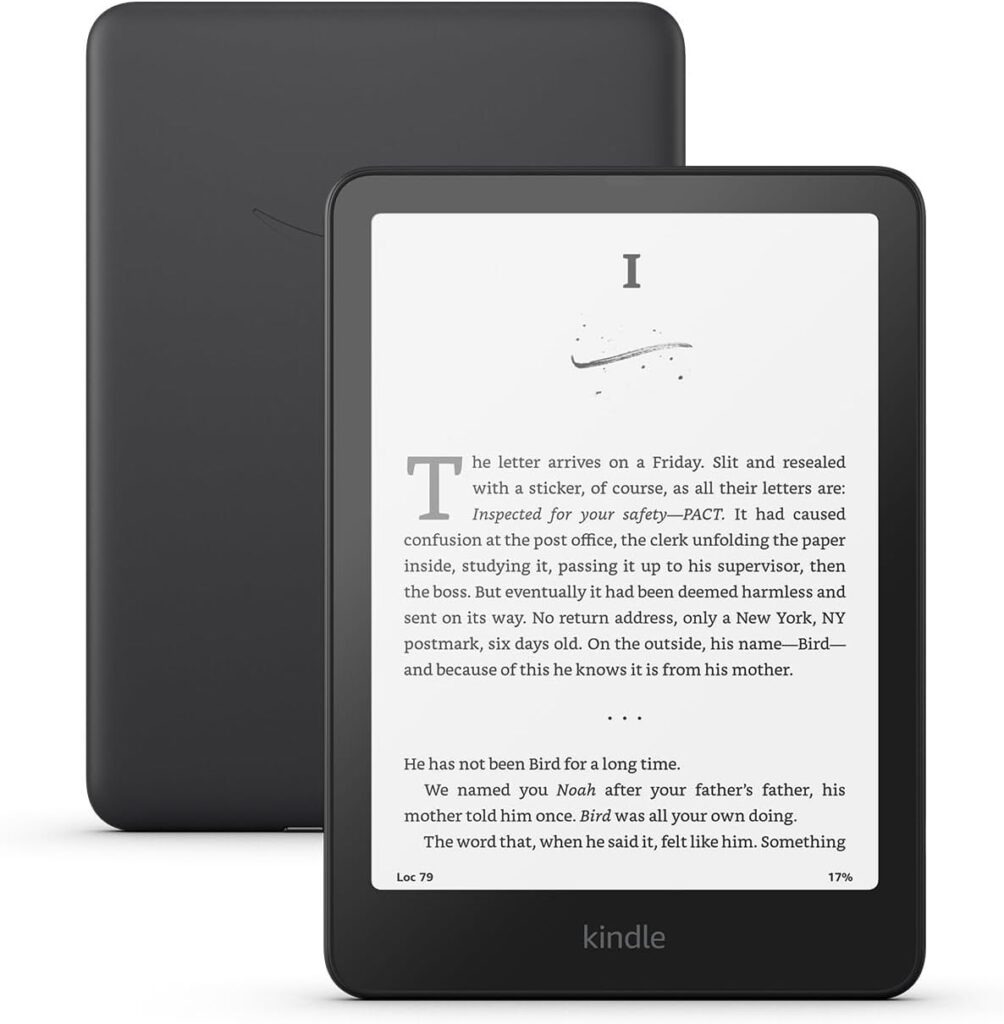
Amazon Kindle Paperwhite (12th generation, 2024) Specs
Amazon's own format list is the most revealing part of the Paperwhite's spec sheet: Kindle formats, plain text, PDF and unprotected MOBI open natively, and EPUB only "through conversion". The most widely used open ebook format in the world still will not open directly on the best-selling ereader, twelve generations in. Nothing in the hardware prevents it. It is a shop decision wearing a technical coat.
Past that, this is a very well-judged piece of equipment. The current Paperwhite grew to a seven-inch screen without growing much in the hand, keeps the flush glass front that makes the cheaper Kindle look dated, and is rated IPX8, so a bath edge or a poolside lounger is not a risk. It charges over USB-C, holds more books than anyone will read, and Amazon quotes its endurance in weeks, and at half an hour of reading a day with the radio off, that is what it does.
Its place in the lineup is defined by two omissions. The Signature Edition above it adds an auto-adjusting light sensor and wireless charging, and the Colorsoft adds colour. Everything else – screen, sharpness, warm light, waterproofing – is shared. So the question is never whether the Paperwhite is good, but whether those two conveniences justify the step up, and for most readers they do not.
The honest limitation is the walls around it. Audiobooks work over Bluetooth only, because there is no speaker and no headphone socket. Library borrowing, side-loading and note export all work, but each is a small detour rather than a feature. You are buying into a bookshop as much as a reading device, and that is the real price.
Category strengths
Where the Amazon Kindle Paperwhite (12th generation, 2024) beats the average
- A much higher battery life (weeks) ?12 weeks vs 7.6 weeks (avg)
- A slightly bigger screen ?7" (17.78 cm) vs 6.5" (16.51 cm) (avg)
- A slightly slimmer body ?7.8 mm vs 7.9 mm (avg)
Where the Amazon Kindle Paperwhite (12th generation, 2024) trails the average
- No EPUB support ?
- A slightly heavier build ?211 g vs 192.5 g (avg)
How this VS Score was computed
Score 58: each known spec is measured against the median of basic prose e-readers (4 products, medians winsorised to the 10th–90th percentile), then weighted. 49% of the scoreable weight could be used; unknown values, features not applicable to this class and proxies (battery capacity where a rated life exists) add or remove nothing.
| Specification | This product | Cohort median | Score weight | Points moved |
|---|---|---|---|---|
| Adjustable warm light | Yes | 75% of the class have it | 1 | +50.0 |
| Waterproof | Yes | 75% of the class have it | 1 | +50.0 |
| EPUB support | No | 50% of the class have it | 0.5 | −24.0 |
| Flush screen | Yes | 67% of the class have it | 0.3 | +15.0 |
| Weight | 211 | 192.5 | 2 | −8.0 |
| Page-turn buttons | No | 33% of the class have it | 0.13 | −6.0 |
| Screen size | 7 | 6.5 | 1 | +4.0 |
| Thickness | 7.8 | 7.9 | 0.5 | +0.5 |
| Pixel density | 300 | 300 | 2 | +0.0 |
| Internal storage | 16 | 16 | 0.3 | +0.0 |
| Battery life (weeks) | 12 | 7.6 | 1.5 | +0.0 |
Not scored: Resolution (unknown: not scored); Color display (not scored for this class of product); Front light (standard for the class (100% have it)); Auto-brightness (too few comparable peers (2, need 3)); Dark mode (standard for the class (100% have it)); Touchscreen (standard for the class (100% have it)); Stylus support (not scored for this class of product); Audiobook support (standard for the class (100% have it)); Text-to-speech (too few comparable peers (2, need 3)); Library lending (unknown: not scored); Cloud sync (standard for the class (100% have it)); App store (not scored for this class of product); Expandable storage (microSD) (too few comparable peers (2, need 3)); RAM (unknown: not scored); Battery capacity (unknown: not scored); Charge time (too few comparable peers (2, need 3)); USB-C (standard for the class (100% have it)); Wireless charging (too few comparable peers (2, need 3)); Bluetooth (standard for the class (100% have it)); Cellular (not applicable: only 0% of this class have it); Speakers (not applicable: only 0% of this class have it); 3.5mm headphone jack (not applicable: only 0% of this class have it).
Editor’s note
The thing I would tell a first-time buyer is that the display is the whole point, and it has sat at 300 ppi for long enough that the number has stopped being interesting. Text on this screen is indistinguishable from print at reading distance, it does not flicker, and it does not glow at you. If you have only ever read on a phone, the difference is not subtle.
What has changed in this generation is speed. Amazon claims page turns are twenty per cent faster, a marketing figure with no baseline attached, but the direction is right: the sluggishness that used to make dictionary lookups and menu navigation feel like work is largely gone. It is the first Paperwhite where the interface stops reminding you it is running on e-ink.
The compromises are consistent and worth naming. At 211 g it is noticeably heavier than the small Kindle, which matters if you read one-handed in bed. There are no page-turn buttons, so every page is a tap on glass – a real annoyance inside a cover, in gloves, or lying on your side. And the front light stays wherever you last set it, because the sensor that would adjust it lives on the more expensive model.
Value is where it does well. It charges fully in under two and a half hours, it will outlast several phones, and Amazon supports these devices with software updates for an unusually long time.
My hesitation is not the hardware at all. It is that a Kobo at similar money reads library books and open formats without a detour, and if your reading comes from a library card rather than a bookshop account, that is the one to buy. Everyone else is getting a very good device with a very closed door on one side.
Specifications
Quality bars are generated automatically against 12 other e-readers.
Display
Reading
Storage & performance
Battery
Connectivity
Design
Sources and verification
Where the specifications come from
- Official product pageamazon.com
- Independent testinggoodereader.com
- Specification database (cross-check)blog.the-ebook-reader.com
- Retailer listing (cross-check)abt.com
Verification
- First published
- Specifications last checked
- Sheet completeness
- 32 of 39 specifications verified; the rest show as Unknown and are never estimated or scored
- Page type
- Product specification page — Compiled from the manufacturer’s published specifications and the cited sources; this is not a hands-on test.
- Basis
- Research-based: specifications and editorial text were compiled from the documents listed here and the manufacturer’s published data. We have not tested this unit ourselves; where independent measurements are mentioned they belong to the linked publication.
Where to buy
Prices and availability may change. Check the retailer before buying. We may earn a commission on purchases.
Price history
E-Readers with similar specs to the Amazon Kindle Paperwhite (12th generation, 2024)
Ratings & reviews
No reviews yet. Be the first to share your experience.
The bottom line
The Amazon Kindle Paperwhite (12th generation, 2024) earns a VS Score of 58, comfortably above average among the 13 e-readers we compare here.
- Who it’s for
- Someone who buys their books from Amazon and wants the device to disappear: a large sharp waterproof screen, weeks between charges, and no decisions to make.
- Who should look elsewhere
- Readers whose books come from a public library or from open-format shops. The conversion step is real friction and a Kobo removes it entirely. Also wrong for anyone who wants physical page-turn buttons.
- The trade-off that matters
- You are paying for a bookshop as much as for a reader. The hardware is excellent and the store around it is closed, and the second of those will shape your reading more than the first.
- The main alternative
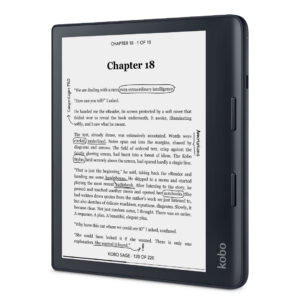
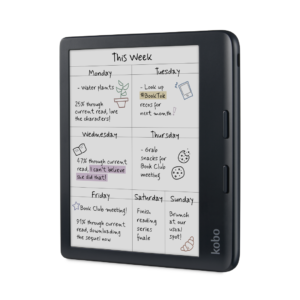
- Kobo Libra Colour – page-turn buttons, native EPUB and library borrowing without a detour, for more money.
The VS Score is calculated from the weighted specifications above, compared with every other e-reader we track — a shortlisting guide, not a substitute for your own priorities. See how we score.