BOOX Go Color 7: Specs, Features, Pros & Cons
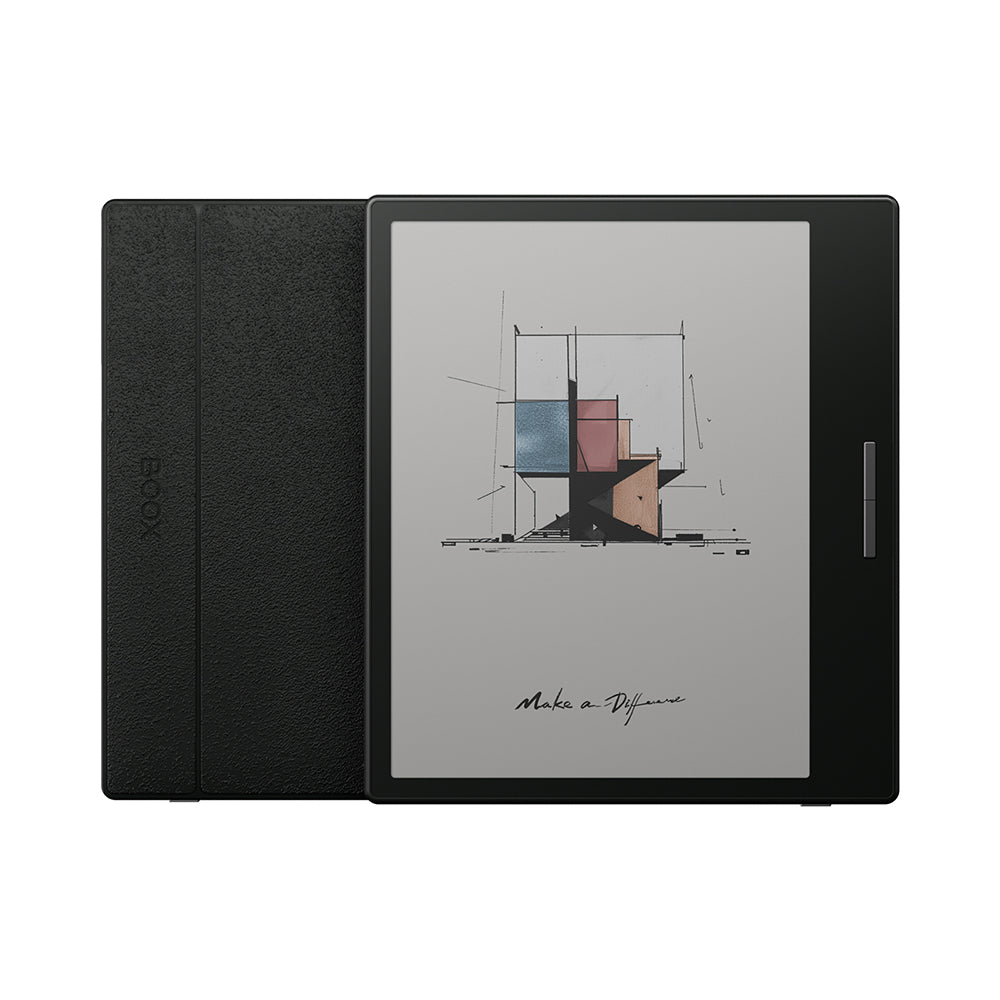
BOOX built its name on writing tablets, which makes the Go Color 7 an odd item in its own catalogue: it is the rare Onyx reader that takes no stylus at all. None ships with it and none can be bought for it, so the note-taking layer that defines nearly everything else the company sells is absent here. That omission is also the quickest way to tell this model apart from the Gen II that replaced it, which looks almost identical on a shelf but runs newer software and does accept a pen.
What remains is a 7-inch colour E Ink reader running full Android with the Google Play Store installed. The colour comes from a filter layer sitting over a monochrome panel, which means text stays crisp while colour images resolve at a fraction of that detail and look muted beside any backlit screen. Treat it as colour for book covers, highlighter shades, comic panels and the occasional chart, not as a stand-in for a tablet.
The Android side is the real draw. Libby, Kindle, Kobo and Google Play Books all install and run, so no single bookshop owns the device, and the built-in speaker with text-to-speech means spoken books work without pairing anything first. The catch is that there is no headphone socket at all. The USB-C port doubles as the audio output, so wired listening needs an adapter you will have to buy separately.
It suits a reader who moves between several bookshops and does not want the hardware choosing one for them. There is no water protection here, so keep it to the commute and the armchair. And anyone shopping this generation specifically should check the discount against the newer model carefully, because the two sit close together and the replacement starts its support window a full year later.
Category strengths
Where the BOOX Go Color 7 beats the average
- A bigger screen ?7" (17.78 cm) vs 6.13" (15.57 cm) (avg)
- A slightly slimmer body ?6.4 mm vs 6.7 mm (avg)
- Slightly higher resolution ?1,680 px vs 1,648 px (avg)
Where the BOOX Go Color 7 trails the average
- No stylus support ?
- A heavier build ?195 g vs 175 g (avg)
How this VS Score was computed
Score 50: each known spec is measured against the median of Android e-readers (7 products, medians winsorised to the 10th–90th percentile), then weighted. 44% of the scoreable weight could be used; unknown values, features not applicable to this class and proxies (battery capacity where a rated life exists) add or remove nothing.
| Specification | This product | Cohort median | Score weight | Points moved |
|---|---|---|---|---|
| Color display | Yes | 57% of the class have it | 0.5 | +25.0 |
| Stylus support | No | 50% of the class have it | 0.5 | −24.0 |
| Speakers | Yes | 67% of the class have it | 0.2 | +10.0 |
| Weight | 195 | 175 | 2 | −10.0 |
| Cellular | No | 43% of the class have it | 0.2 | −9.6 |
| Screen size | 7 | 6.13 | 1 | +7.0 |
| Thickness | 6.4 | 6.7 | 0.5 | +1.0 |
| Pixel density | 300 | 300 | 2 | +0.0 |
| Internal storage | 64 | 64 | 0.7 | +0.0 |
| RAM | 4 | 4 | 0.5 | +0.0 |
| Battery capacity | 2,300 | 2,300 | 1 | +0.0 |
Not scored: Resolution (one resolution dimension is not a sharpness measure; pixel density is scored instead); Front light (standard for the class (100% have it)); Adjustable warm light (standard for the class (86% have it)); Auto-brightness (unknown: not scored); Flush screen (unknown: not scored); Dark mode (unknown: not scored); Touchscreen (standard for the class (100% have it)); Page-turn buttons (standard for the class (80% have it)); EPUB support (standard for the class (100% have it)); Audiobook support (standard for the class (100% have it)); Text-to-speech (standard for the class (100% have it)); Library lending (unknown: not scored); Cloud sync (standard for the class (100% have it)); App store (standard for the class (100% have it)); Expandable storage (microSD) (standard for the class (100% have it)); Battery life (weeks) (unknown: not scored); Charge time (unknown: not scored); USB-C (standard for the class (100% have it)); Wireless charging (unknown: not scored); Bluetooth (standard for the class (100% have it)); 3.5mm headphone jack (not applicable: only 0% of this class have it); Waterproof (not applicable: only 0% of this class have it).
Editor’s note
The question this device poses is not whether colour E Ink is worth having, but whether buying the outgoing generation of it makes sense, and that comes down almost entirely to the size of the discount you are offered. In use the two generations are close enough that you would struggle to tell them apart. What you give up by taking this one is the pen, a newer Android base, and roughly a year off the front of the support window BOOX advertises, which it sets at three years or more from each model's launch date. If the saving is small, that is a poor trade.
Where it earns its keep is storage and openness. Sixty-four gigabytes with a microSD slot behind it goes well past what Kindle or Kobo hardware offers at this size, and for anyone carrying scanned textbooks, comics or a decade of accumulated PDFs that matters far more than any display figure. At 195 g it stays comfortable one-handed for long stretches, and the physical page-turn buttons mean you are not reaching across the panel every page.
The colour I would treat as a convenience rather than a reason to buy. It makes covers and manga panels readable and it keeps annotation ink distinguishable, but the filter layer that produces it also cuts panel brightness, so you lean on the front light in conditions where a monochrome reader would not need it. That quietly shortens the time between charges.
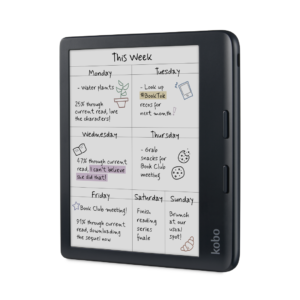
Who ends up regretting this? Anyone expecting tablet colour, anyone who assumed they could mark up documents on it, and anyone who underestimates how much configuration an Android reader asks of its owner. If what you want is a colour reader that stays out of your way, the Kobo Libra Colour does less and does it more predictably.
Specifications
Quality bars are generated automatically against 12 other e-readers.
Display
Reading
Storage & performance
Battery
Connectivity
Design
Sources and verification
Where the specifications come from
- Official product pageshop.boox.com
Verification
- First published
- Specifications last checked
- Sheet completeness
- 31 of 39 specifications verified; the rest show as Unknown and are never estimated or scored
- Page type
- Product specification page — Compiled from the manufacturer’s published specifications and the cited sources; this is not a hands-on test.
- Basis
- Research-based: specifications and editorial text were compiled from the documents listed here and the manufacturer’s published data. We have not tested this unit ourselves; where independent measurements are mentioned they belong to the linked publication.
E-Readers with similar specs to the BOOX Go Color 7
Ratings & reviews
No reviews yet. Be the first to share your experience.
The bottom line
The BOOX Go Color 7 earns a VS Score of 50, a solid mid-pack result among the 13 e-readers we compare here.
- Who it’s for
- Someone who reads across several bookshops, and wants colour covers and comic panels without giving up Libby, Kindle and Kobo on the same device.
- Who should look elsewhere
- Anyone who wants to annotate PDFs or take handwritten notes. This is the one BOOX reader that will not accept a pen, so almost anything else in the range serves you better.
- The trade-off that matters
- Android hands you every reading app there is, and charges for it in responsiveness and setup time. This is a reader you configure before you open a book.
- The main alternative
- Kobo Libra Colour – the same kind of colour panel and physical page-turn buttons in a much simpler, better-supported package, and it does take a stylus if you later decide you want one.
The VS Score is calculated from the weighted specifications above, compared with every other e-reader we track — a shortlisting guide, not a substitute for your own priorities. See how we score.