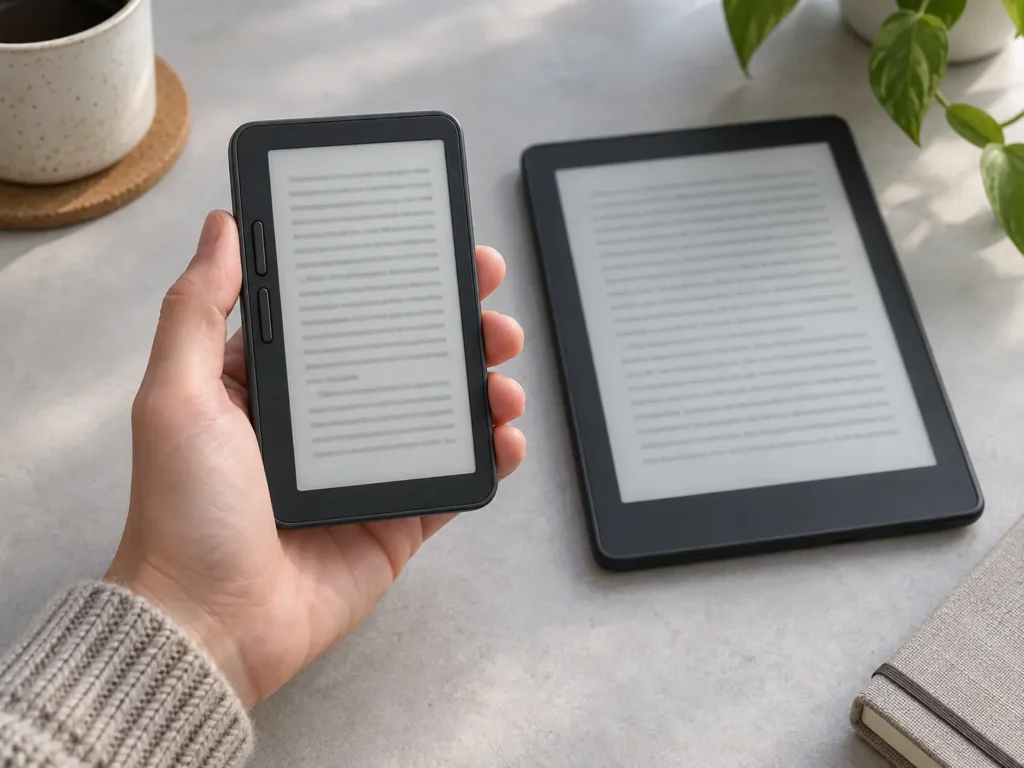
Three pocket-sized e-readers reached the news inside three weeks, and IFA 2026 in Berlin, held from September 4 to 8, gave two of them a stage. BOOX showed the Picco, PocketBook brought the Q, and XTEINK moved its X4 Pro onto Amazon. The pattern matters more than any single device. Phone-shaped electronic paper is becoming a real product class. This guide sets out what these readers are, what the small size costs you, and the question that decides whether one will suit you at all. It is not the screen. It is the software.
Three devices in three weeks
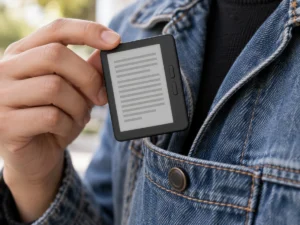
The BOOX Picco is the smallest of them. BOOX describes it as the first product in a new category it calls Tile, and hands-on coverage from IFA 2026 appeared on September 5, 2026. The device carries a 3.97-inch monochrome electronic paper touchscreen, a front light with brightness and warmth control, physical page-turn buttons, a microSD slot and USB-C. BOOX is aiming at a November 2026 release and has not announced pricing.
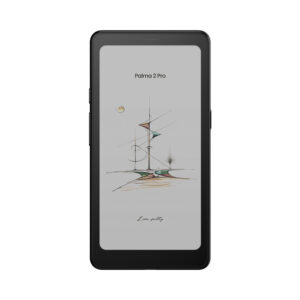
PocketBook took the opposite approach with the Q, shown at the same event after news coverage in late August 2026. Its 5.84-inch E Ink Carta 1300 panel runs at 788 by 1576 pixels and 300 pixels per inch, which matches full-size readers. The body measures 154 by 75.8 by 6.5 millimetres and weighs 130 grams. PocketBook lists 1 GB of memory, 32 GB of storage with no card slot, an IPX4 rating, dual-band Wi-Fi, Bluetooth 5.0 for headphones and USB-C with OTG. Availability is set for late autumn 2026.
XTEINK is the outlier. Its X4 Pro launched through the company’s own site in late July 2026 and appeared as an Amazon listing on September 4, 2026, though the listing was not yet accepting orders. Coverage of the brand has repeatedly flagged buyer complaints about shipping delays and difficult returns, so waiting for a retailer with a straightforward returns process is sensible here.
Why the size is the easy part
Shrinking electronic paper is not the hard problem. Panels below five inches have existed for years in shelf labels and small signage, and 300 pixels per inch is now ordinary.
The hard problem is what a reader can do once you take the phone form factor and remove the phone. These devices deliberately drop notifications, feeds and scrolling apps, which is the entire appeal. Reading on paper-like glass without a messaging app three taps away is a different experience from reading on a phone.
Physical page-turn buttons return at this size for a practical reason. A four-inch screen leaves little room for a thumb that also has to tap, so a rocker on the edge keeps your hand still.
The operating system decides what you can read
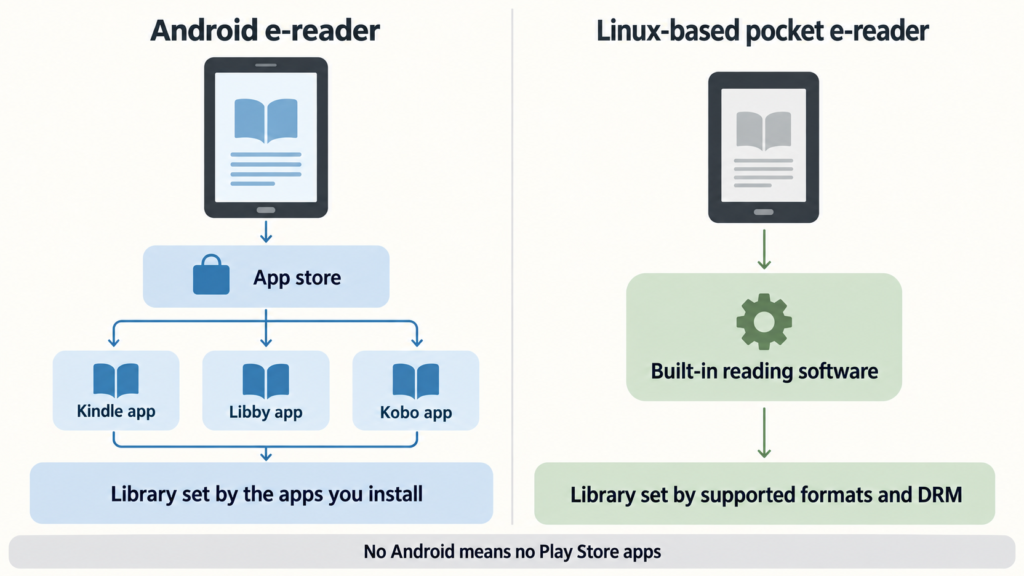
Here is the question that separates these devices. The Picco and the Q both run Linux-based reading software, and that choice sets a hard boundary around your library.
No Android means no Google Play. The Kindle app, the Libby app and the Kobo app are Android applications, so they cannot be installed on a system that does not run Android. Whatever these readers open, they open through their own built-in software.
The contrast with BOOX’s larger devices is sharp. The BOOX Note Air5 C ships as a full Android tablet with the Play Store, so it will run a rival reading client, a bank app or a note service that has nothing to do with BOOX. That flexibility is the reason many people buy it. The Picco gives it up on purpose, in exchange for simpler, lighter and cheaper hardware.
Formats, DRM and library loans
PocketBook answers the question directly. The Q reads 25 formats natively, including EPUB, PDF, MOBI, AZW and CBR, and it handles Adobe DRM and LCP, which are the protection schemes most European library platforms use. A PocketBook version of the Libby app comes pre-installed, so borrowed titles have a documented route onto the device.
BOOX has not answered it. Format support for the Picco is still unconfirmed, and so are the processor, the memory, the screen resolution, the battery life and whether audiobooks work at all. Reports from IFA also disagree about Bluetooth, with one hands-on listing wireless audio and later coverage calling it unclear. Which of those is right will stay open until BOOX publishes a specification sheet.
The gap is worth waiting out. A pocket reader that cannot open your existing books is an ornament, and a purchase made before the format list is published is a gamble.
What you give up at this size
Reading area is the obvious cost. A four-inch page holds roughly a third of the words a standard six-inch reader shows at the same type size, so you turn pages far more often. Some readers find that pleasant and some find it maddening, and the only honest test is to try one.
PDFs are the real casualty. A fixed A4 page reflowed onto a four-inch screen is close to unreadable, and zooming turns a book into a map. Anyone whose reading is mostly academic papers or manuals should stay at seven inches or larger.
Storage deserves a check as well. The PocketBook Q has no memory card slot, so its internal storage is all you get, while the Picco does take a microSD card. For text that difference rarely matters. For comics and illustrated books it matters a great deal.
Who these readers suit
Buy a pocket reader as a second device, not a first one. It fits a coat pocket, survives a commute and gets read on days when a larger reader stays at home.
Three groups gain the most. Commuters who read standing up, travellers who count grams, and anyone trying to break the habit of picking up a phone during idle minutes.
If you own one e-reader and want it to do everything, none of these is the right answer. A six or seven-inch model still reads better, handles PDFs better and costs less than buying twice.
What to watch before you buy
For the Picco, wait for BOOX to publish supported formats, battery figures and pricing. Those three facts decide whether the device is a bargain or a limitation.
The Q’s specification is already public and detailed, so the open questions there are real-world battery life and how well PocketBook’s reading software performs at this size. Independent testing should answer both before the late autumn release.
With the X4 Pro, availability through a mainstream retailer is the thing to confirm, because a return policy you can rely on is worth more than any spec on the page.