Lenovo Tab One: Specs, Price, Pros & Cons
Lenovo's Android upgrade table ends security maintenance for the Wi-Fi Tab One on March 14, 2027, and for the LTE model on April 24, 2027. For a tablet bought in October 2026, that is five to six months of patches, and it is the first thing to weigh, because a tablet signed in to a library account, a store account and an email inbox should not run unpatched for long. Lenovo lists a single Android upgrade for it, from Android 14 to Android 15.
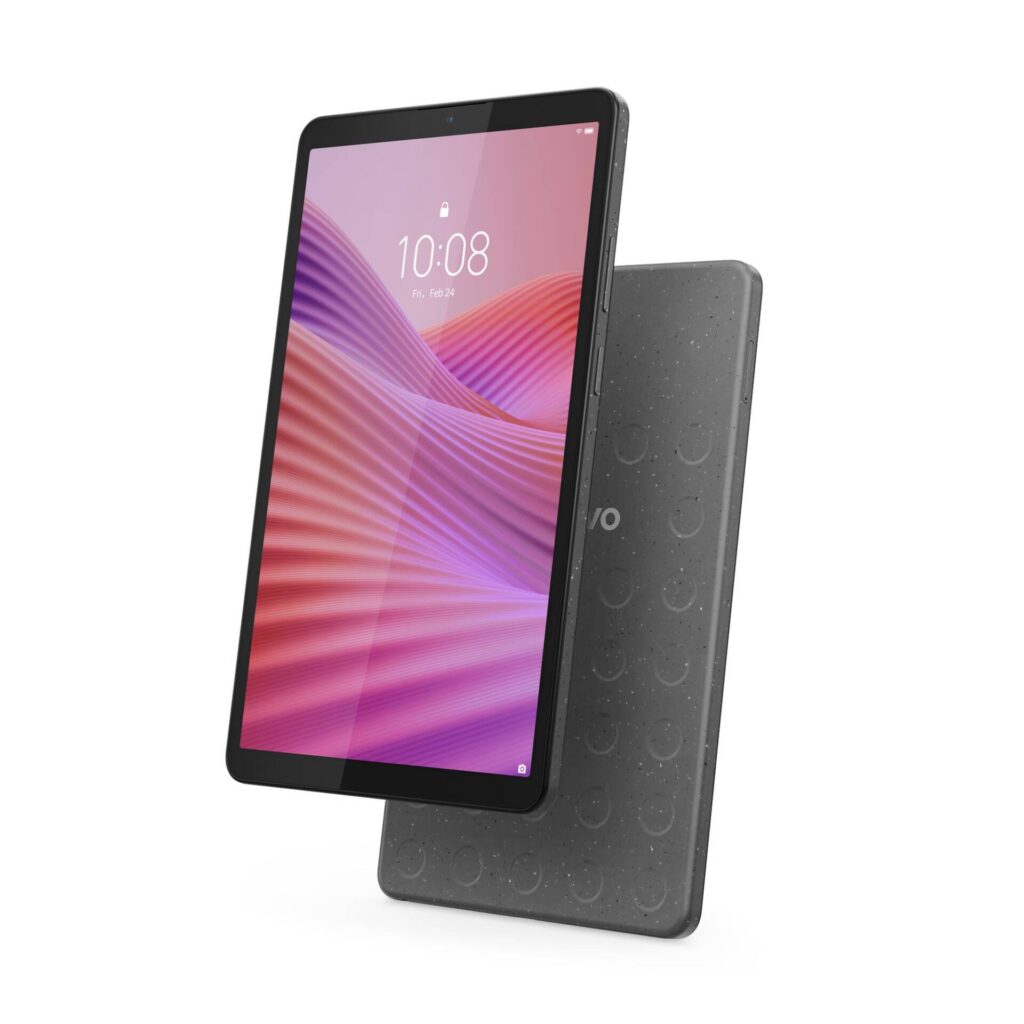
The rest is a plain budget Android tablet with an 8.7-inch screen in a plastic shell, small enough to hold in one hand for a chapter and cheap enough to hand to a child. There is no pen support and no fingerprint reader, and the face unlock relies on the front camera alone.
Its pixel density sits well short of the 300 ppi that Kindle and Kobo readers use, so small text looks softer, and it is a backlit LCD, which means battery life is counted in hours and a sunny balcony washes it out. Comics suffer less from that than novels do, because a drawn panel forgives a soft edge that small serif type does not.
Android runs every reading app side by side, from Kindle and Kobo to Libby, a comics reader and a browser for web serials, and the color panel shows comics and cookbook photos that E Ink renders in gray or muted tones.
Category strengths
Where the Lenovo Tab One beats the median
- A lighter build ?320 g vs 430 g (median)
- Longer battery life ?12.5 h vs 10 h (median)
Where the Lenovo Tab One trails the median
- No stylus support ?
- Much less storage ?64 GB vs 128 GB (median)
- A much lower-resolution front camera ?2 MP vs 5 MP (median)
- Lower resolution ?1,340 px vs 2,112 px (median)
- Less RAM ?4 GB vs 5 GB (median)
- A smaller screen ?8.7" (22.1 cm) vs 11" (27.94 cm) (median)
- A lower pixel density ?179 ppi vs 245 ppi (median)
- A thicker body ?8.5 mm vs 7 mm (median)
- Slower wired charging ?15 W vs 18 W (median)
- Slightly lower peak brightness ?480 nits vs 490 nits (median)
How this VS Score was computed
Score 45: each known spec is measured against the median of LCD tablets (5 products), then weighted; 50 means level with that median. In classes of six or more, a value beyond the class’s 10th–90th percentile range counts as that limit, so one extreme product cannot set the scale. 64% of the scoreable weight could be used; unknown values, features not applicable to this class and proxies (battery capacity where a rated life exists) add or remove nothing.
| Specification | This product | Cohort median | Score weight | Points moved |
|---|---|---|---|---|
| Internal storage | 64 | 128 | 1.5 | −37.5 |
| Weight | 320 | 430 | 2 | +34.0 |
| Battery life | 12.5 | 10 | 2 | +26.0 |
| Front camera | 2 — held to half its range (fewer than six products in this class list it) | 5 | 1 | −25.0 |
| Stylus support | No — held to half its range (fewer than six products in this class list it) | 80% of the class have it | 1 | −25.0 |
| RAM | 4 | 5 | 2 | −20.0 |
| Screen size | 8.7 | 11 | 1.5 | −15.0 |
| Pixel density | 179 | 245 | 1 | −13.0 |
| Expandable storage (microSD) | Yes — held to half its range (fewer than six products in this class list it) | 60% of the class have it | 0.5 | +12.5 |
| 5G support | No — held to half its range (fewer than six products in this class list it) | 33% of the class have it | 0.5 | −12.5 |
| Thickness | 8.5 | 7 | 1 | −9.0 |
| Wired charging | 15 | 18 | 1 | −8.0 |
| Wi-Fi standard | Wi-Fi 5 | Wi-Fi 6 | 0.5 | −4.0 |
| Peak brightness | 480 | 490 | 1 | −1.0 |
| Refresh rate | 60 | 60 | 1.5 | +0.0 |
| Rear camera | 8 | 8 | 1 | +0.0 |
Not scored: Biometric unlock (standard for the class (100% have it)); Resolution (one resolution dimension is not a sharpness measure; pixel density is scored instead); OLED display (not applicable: only 0% of this class have it); Laminated display (unknown: not scored); AnTuTu benchmark (unknown: not scored); Battery capacity (capacity is a proxy; the rated battery life is scored instead); USB-C (standard for the class (100% have it)); Records 4K video (unknown: not scored); Keyboard support (unknown: not scored); Stereo speakers (standard for the class (100% have it)); Accelerometer (standard for the class (100% have it)); Gyroscope (unknown: not scored); Compass (unknown: not scored).
Editor’s note
Once the patches stop in spring 2027, anything signed in to accounts belongs on a newer device. The tablet keeps working, and this one becomes a comics reader or a recipe screen on the kitchen counter.
Lenovo rates the battery at 12.5 hours of YouTube streaming and 16.5 hours of Chrome browsing, both measured under what Lenovo calls optimal laboratory conditions, and a screen turned up for a bright room will drain faster than either. Neither is a reading test. An evening with an ebook is closer to the lighter browsing load, so a few evenings between charges is a fair expectation, where an e-ink reader goes weeks.
Storage is less of a worry than it looks. Books take very little space, and the microSD slot accepts cards up to 1 TB, so the base model covers a comics library too. The 128 GB version only makes sense if you keep downloaded video on it.
The Helio G85 is an older chip, fine for turning pages and slow with anything heavier.
Lenovo's eye-care badge, a TUV Low Blue Light certificate, covers a software filter, the kind of night mode every Android phone has. It warms the colors at bedtime. It does not make an LCD behave like e-ink.
The Tab One ships with a 20 W adapter or with no adapter at all, depending on the model, according to Lenovo's sheet. It charges at up to 15 W, so an old phone brick will do if yours arrives without one.
Specifications
Quality bars show where each figure sits between the lowest and highest of the 5 LCD tablets this VS Score is measured against.
Design
Display
Performance
Battery
Cameras
Productivity & connectivity
Sensors
Sources and verification
Where the specifications come from
- Official product pagepsref.lenovo.com
- Support and firmware documentationsupport.lenovo.com
- Independent testingmynexttablet.com
Verification
- First published
- Specifications last checked
- Sheet completeness
- 37 of 47 specifications verified; the rest show as Unknown and are never estimated or scored
- Page type
- Product specification page — Compiled from the manufacturer’s published specifications and the cited sources; this is not a hands-on test.
- Basis
- Research-based: specifications and editorial text were compiled from the documents listed here and the manufacturer’s published data. We have not tested this unit ourselves; where independent measurements are mentioned they belong to the linked publication.
Where to buy
Prices and availability may change. Check the retailer before buying. We may earn a commission on purchases.
Price history
Tablets with similar specs to the Lenovo Tab One

Ratings & reviews
No reviews yet. Be the first to share your experience.
The bottom line
The Lenovo Tab One earns a VS Score of 45, below the median of the 5 LCD tablets it is measured against (a score of 50 is level with that median).
- Who it’s for
- A reader who wants one inexpensive color screen for comics, magazines and library loans and is happy to retire it from account use once Lenovo's patches stop in 2027.
- Who should look elsewhere
- Anyone who reads long novels every night and wants weeks between charges, or who wants a tablet that still gets security patches after spring 2027.
- The trade-off that matters
- It runs every reading app you might want, but on a soft LCD with a short support window left, so it wins on choice and loses on comfort and lifespan.
- The main alternative
- Kobo Clara Colour: a color E Ink reader with OverDrive library lending built in and weeks between charges, if you can live without video and other apps.
The VS Score is calculated from the weighted specifications above, each measured against the median of comparable LCD tablets — a shortlisting guide, not a substitute for your own priorities. See how we score.