Apple iPad 11-inch (A16): Specs, Price, Pros & Cons
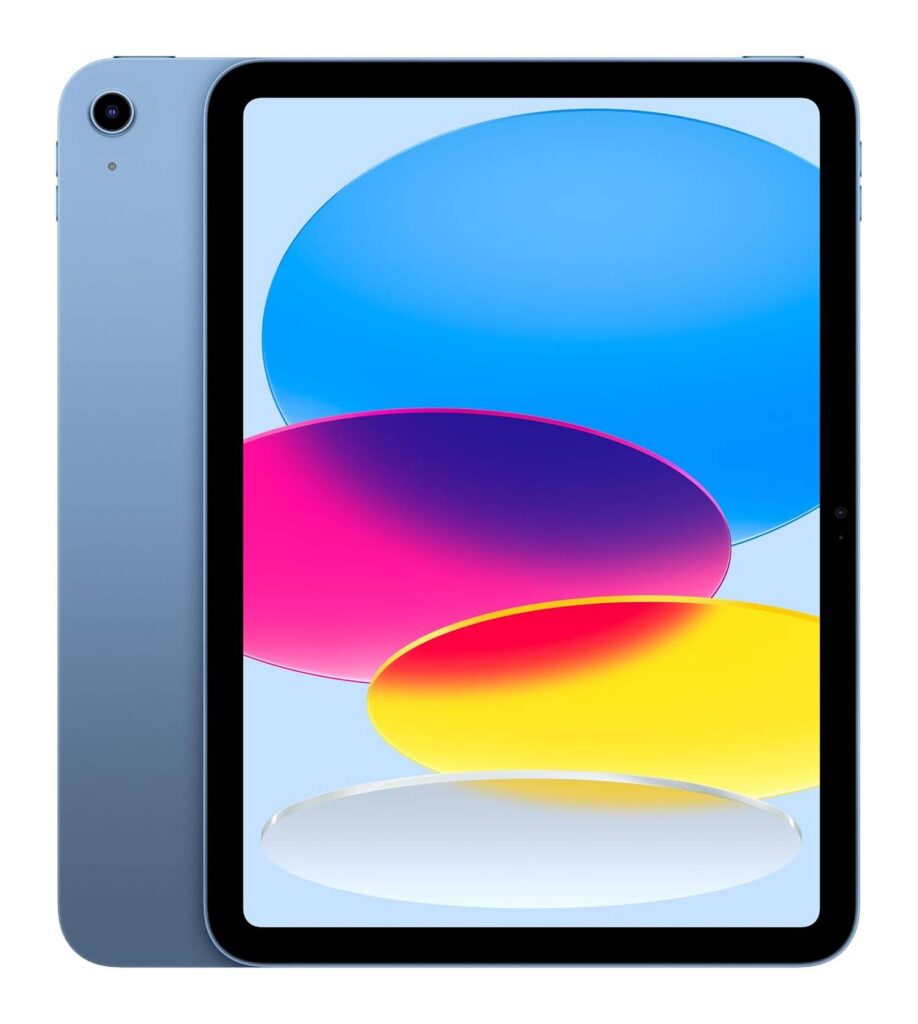
If you are comparing e-readers, you may already own a tablet, and it could well be this one. The iPad 11-inch (A16) is Apple's least expensive iPad, the model below the iPad Air and the iPad mini, and for reading it is the benchmark every e-ink device is quietly measured against: it opens any store's books, any comic and any PDF, in full color.
The A16 in the name marks a chip update. The body, the Touch ID top button, the landscape front camera and the USB-C port all carried over from the previous generation, and the storage ladder now starts higher than it did. For a reader, what matters is less the processor than the glass: a backlit LCD, bright and sharp, but glossy and lit from behind.
That is the central trade on this page. An iPad does everything an e-reader does except the two things e-readers exist for: comfortable reading in direct sun, and battery life measured in weeks rather than an evening or two. It is also far heavier to hold one-handed than a six- or seven-inch reader, which matters more in bed than at a desk.
Where it earns its place is range. Kindle, Kobo, Libby and Apple Books run side by side, magazines and graphic novels look the way they were printed, and textbooks with diagrams do not have to be squeezed onto a gray screen. It works with Apple's USB-C Pencil for annotation, though not with the Pencil Pro or the second-generation Pencil, so think of it as a margin-note tablet.
It undercuts the rest of Apple's lineup comfortably, which is exactly why it ends up as the default choice. Whether it should be depends on how much of your reading is plain text.
Category strengths
Where the Apple iPad 11-inch (A16) beats the median
- A much higher-resolution front camera ?12 MP vs 5 MP (median)
- A much higher-resolution rear camera ?12 MP vs 8 MP (median)
- Higher resolution ?2,360 px vs 2,112 px (median)
- A slightly higher pixel density ?264 ppi vs 245 ppi (median)
- Slightly higher peak brightness ?500 nits vs 490 nits (median)
Where the Apple iPad 11-inch (A16) trails the median
- No expandable storage (microSD) ?
- A heavier build ?477 g vs 430 g (median)
How this VS Score was computed
Score 53: each known spec is measured against the median of LCD tablets (5 products), then weighted. 44% of the scoreable weight could be used. See how we score
| Specification | This product | Cohort median | Score weight | Points moved |
|---|---|---|---|---|
| Rear camera | 12 | 8 | 1 | +25.0 |
| Front camera | 12 — held to half its range (fewer than six products in this class list it) | 5 | 1 | +25.0 |
| Expandable storage (microSD) | No — held to half its range (fewer than six products in this class list it) | 60% of the class have it | 0.5 | −12.5 |
| Weight | 477 | 430 | 2 | −10.0 |
| Pixel density | 264 | 245 | 1 | +4.0 |
| Wi-Fi standard | Wi-Fi 6 | Wi-Fi 6 | 0.5 | +4.0 |
| Peak brightness | 500 | 490 | 1 | +1.0 |
| Thickness | 7 | 7 | 1 | +0.0 |
| Screen size | 11 | 11 | 1.5 | +0.0 |
| Internal storage | 128 | 128 | 1.5 | +0.0 |
| Battery life | 10 | 10 | 2 | +0.0 |
Not scored: Biometric unlock (standard for the class (100% have it)); Resolution (one resolution dimension is not a sharpness measure; pixel density is scored instead); Refresh rate (unknown: not scored); OLED display (not applicable: only 0% of this class have it); Laminated display (unknown: not scored); RAM (unknown: not scored); AnTuTu benchmark (unknown: not scored); Battery capacity (unknown: not scored); Wired charging (unknown: not scored); USB-C (standard for the class (100% have it)); Records 4K video (too few comparable peers (2, need 3)); Stylus support (standard for the class (80% have it)); Keyboard support (too few comparable peers (2, need 3)); 5G support (unknown: not scored); Stereo speakers (standard for the class (100% have it)); Accelerometer (standard for the class (100% have it)); Gyroscope (too few comparable peers (2, need 3)); Compass (too few comparable peers (2, need 3)).
Editor’s note
I would frame the buying decision around one question: is this going to be a reading device that also does other things, or another tablet you will occasionally read on? The spec sheet answers it fairly clearly.
As a general tablet it is hard to fault for the money. The A16 is more chip than a reading, streaming and note-taking workload needs, Touch ID is quick, and Apple supports its iPads with software updates for a long time, which is the quiet reason a base iPad holds its value better than most Android tablets in this range.
For reading, the compromises stack up in a specific order. The first is weight: 477 g is more than twice what a typical six-inch e-reader weighs, and it is the difference between holding something book-shaped and propping a tablet on your knees. The second is the screen, rated at 500 nits. That is fine indoors and weak on a sunny balcony, where a front-lit e-ink panel only gets easier to read. The third is stamina: Apple quotes up to 10 hours of web browsing or video, which for a heavy reader means charging every day or two rather than every few weeks.
A smaller annoyance is the port. It is USB-C but runs at USB 2.0 speed, so copying a large comic or audiobook library over a cable is slow. If you sync through the cloud, you will never notice.
If reading is the point, I would rather put the money toward a dedicated color e-ink reader and keep an old phone for everything else. If you want one device that handles comics, textbooks and magazines well and also covers video calls and homework, this is the sensible pick. The TCL TAB 10 Gen 4 is the cheaper Android route with a thinner app library, and the Apple iPad Air 13-inch (M4) only makes sense if you want a much larger canvas for PDFs and sheet music.
Specifications
Design
Display
Performance
Battery
Cameras
Productivity & connectivity
Sensors
Sources and verification
Where the specifications come from
- Official product pageapple.com
- Retailer listing (cross-check)amazon.com
Verification
- First published
- Specifications last checked
- Sheet completeness
- 32 of 47 specifications verified; the rest show as Unknown and are never estimated or scored
- Page type
- Product specification page — Compiled from the manufacturer’s published specifications and the cited sources; this is not a hands-on test.
- Basis
- Research-based: specifications and editorial text were compiled from the documents listed here and the manufacturer’s published data. We have not tested this unit ourselves; where independent measurements are mentioned they belong to the linked publication.
Where to buy
Prices and availability may change. Check the retailer before buying. We may earn a commission on purchases.
Price history
Tablets with similar specs to the Apple iPad 11-inch (A16)
Ratings & reviews
No reviews yet. Be the first to share your experience.
The bottom line
The Apple iPad 11-inch (A16) earns a VS Score of 53, above the median of the 5 LCD tablets it is measured against (a score of 50 is level with that median).
- Who it’s for
- A household that wants one tablet for comics, magazines, textbooks and PDFs in color, plus video calls and schoolwork, and reads plain-text books only now and then.
- Who should look elsewhere
- Anyone who reads mostly novels, reads outdoors or wants to charge once a month: a dedicated e-ink reader does that job better at a fraction of the weight. Artists should look elsewhere too, since only the basic Pencil models are supported.
- The trade-off that matters
- It is a trade of screen type: every reading app and full color, but on a glossy backlit panel that is less comfortable than e-ink for long stretches of text and harder to read in bright sun.
- The main alternative
- Apple iPad mini (A17 Pro): smaller and lighter, so it holds far more comfortably in one hand for long reading sessions, and it supports Apple Pencil Pro, at a higher price.
This page was created with the help of AI. How we work